



Sewing on a Bicycle – Unbroken Will in Gaza
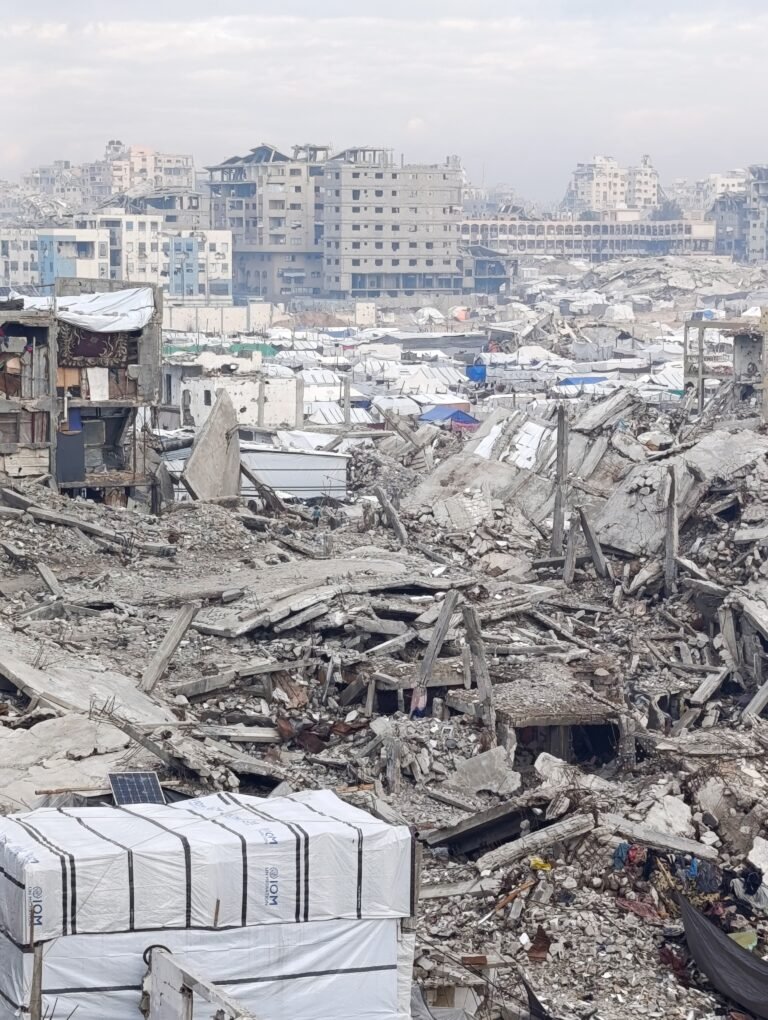
In one of Gaza’s neighborhoods, where rubble stretches from alley to alley and electricity has been out for three days straight, Raed Saad lives a daily story of resilience. Before the war, he ran a small tailoring factory employing around twenty people. His income supported not only his family but also many local community members.
When the war erupted, nothing remained the same. The factory was destroyed, equipment was lost or damaged, electricity was nearly absent, and fuel wasn’t enough to power even a small fan.
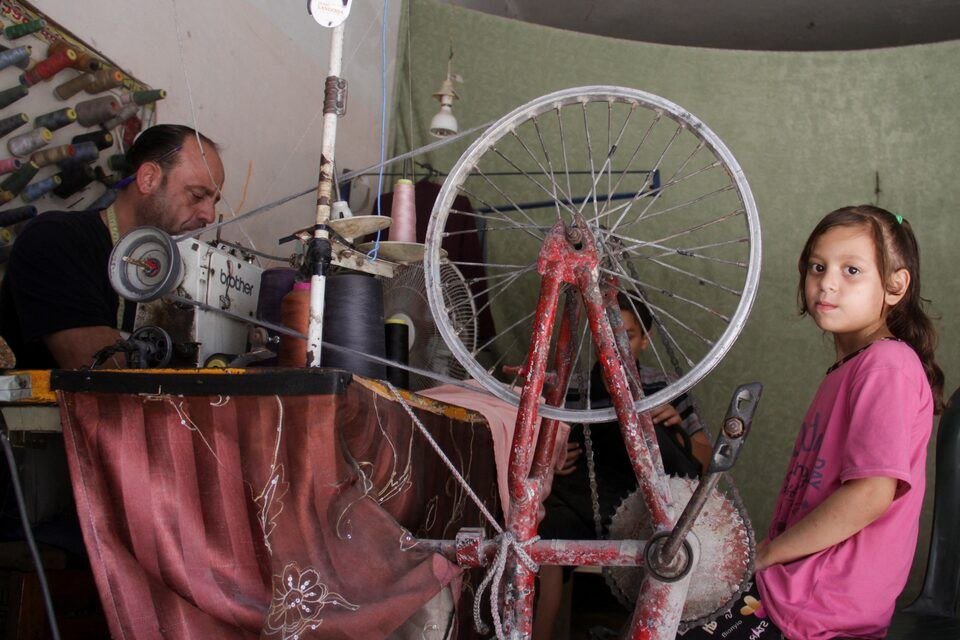
Faced with despair, Raed had two choices: give up or find another way. He chose the latter. Along with his young son, he converted an old bicycle—rusty and worn—into a source of power to operate a sewing machine. The son pedals continuously while Raed cuts and sews fabric, giving new life to old cloth.
Outside, the sound of explosions sometimes lights up the sky, yet Raed keeps going, because continuing is in itself an act of resistance.
In Gaza, unemployment has reached nearly 79%. Thousands of young men and women, including university students, have lost jobs and educational opportunities due to the war. In this reality, every stitch, every transformed piece of fabric is a message saying: “I exist, I work, I remain.”
Raed says, with a mix of sadness and determination:
“The factory was gone, all my dreams turned to dust, but this bicycle and simple solution made me believe I can still give life a chance here.”
This story is not just about sewing—it symbolizes hope and creativity in the face of despair. Success here is measured not by profit but by the ability to adapt and survive.
In a shattered environment, Raed built a new foundation: his willpower. The takeaway: when all doors seem closed, sometimes one small lever—a bicycle seat—can start the wheels turning.
2 thoughts on “Sewing on a Bicycle – Unbroken Will in Gaza”