



Global Boycott Campaigns: People's Weapon Against Genocide in Gaza
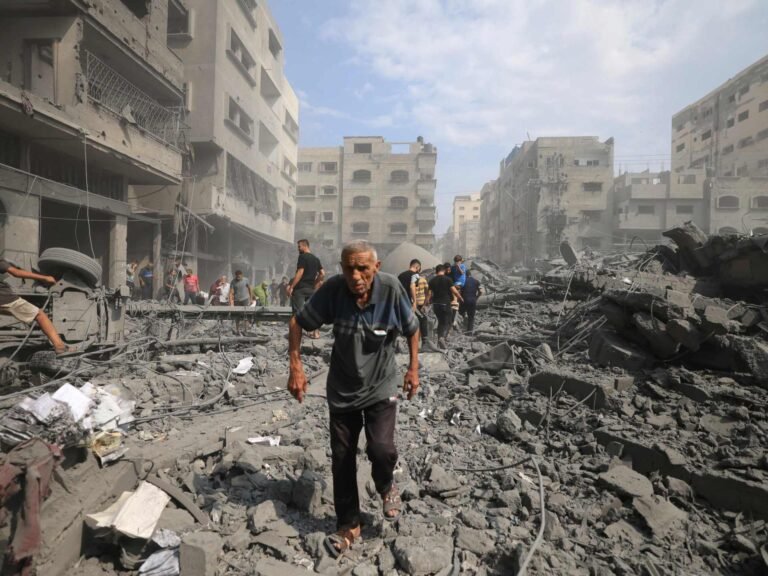
Amid the ongoing genocidal war against the Palestinian people in the Gaza Strip, the Boycott, Divestment, and Sanctions (BDS) movement has emerged as one of the most prominent tools of global popular pressure to confront the Israeli war machine. Through organized field movements and targeted strategies, these campaigns have managed to impose real costs on complicit companies and institutions, achieving tangible accomplishments that reflect the power of organized popular action.
Intellectual Frameworks and Organizational Strategies
The boycott movement is based on clear intellectual foundations and organizational strategies. It adopts the principle of targeted boycott rather than random boycott, by focusing on a limited number of the most complicit and impactful targets to achieve maximum effect. It also believes that ending complicity in the crime of genocide is no longer just a moral responsibility but has become a legal obligation for all states, institutions, and companies.
The movement relies on building popular power capable of translating sentiments into tangible material actions that affect the balance of the conflict, by transforming anger and grief into constructive energy manifested in various forms of peaceful actions ranging from protests to disrupting the work of complicit institutions.
Field Movements: From Protest to Disrupting the War Machine
Boycott campaigns have witnessed diverse and innovative field movements extending from sit-ins in front of embassies to disrupting weapons factories:
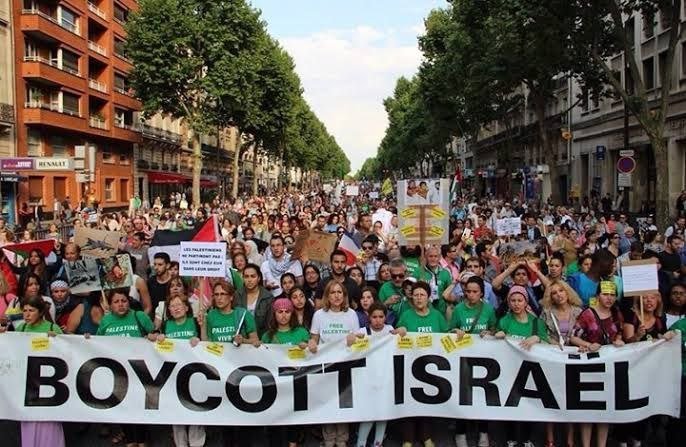
· Protest Movements: Protest events were organized in front of American, British, German, and other embassies of countries partner in the genocide, as well as in front of the headquarters of complicit companies and institutions. These protests extended to include student encampments to escalate pressure on universities to divest, even reaching the occupation of government buildings and disrupting the work of complicit institutions like FIFA.
· Targeting Weapons Companies: In a critically important turn, activists from the London Palestine Network succeeded in closing the “Staffordshire” factory for drone engines belonging to Elbit Systems – the largest Israeli weapons company – for two full days. This action cost the company more than £13,000 and prevented a shipment destined for the United States from leaving.
· Targeted Economic Boycotts: Campaigns focused on boycotting retail chains like “Carrefour” for their involvement in providing donations and support to Israeli soldiers, and companies like “Puma” for sponsoring the Israeli Football Association which includes teams from settlements, and “AXA” for its investments in Israeli banks that fund settlements.
Tangible Successes: Achievements of Boycott Campaigns
The movements of boycott campaigns resulted in tangible achievements at several levels:
· Economic Victories: Popular campaigns forced the French chain “Carrefour” to withdraw from Bahrain and Kuwait, after recording a sharp decline in its net profits for 2024 by 50% compared to 2023. Retail sector profits in the Majid Al Futtaim Group (the regional partner) also decreased by 47%.
· Institutional Impact: In Britain, the “Co-op” group, which runs 2,300 stores and has 6.2 million members, announced its decision to stop supplying from Israel and 17 other countries registered with human rights violations. Observers considered this a move from statements of opinion to reshaping supply chains.
· Cultural and Artistic Boycott: More than 400 musicians and artists from around the world launched the “No Music for Genocide” campaign to boycott events and festivals sponsored or hosted by Israeli institutions. This step aims to withdraw cultural legitimacy from the occupation’s practices.
· National Alternatives: Global markets witnessed the emergence of local alternatives like “Gaza Cola” and “Labayk Cola” and the spread of Palestinian restaurants like “The Palestinian House” in Britain, which witnessed unprecedented and widespread demand.
> ابو سلطان:
The Israeli Response: Recognition of an Existential Threat
The growing impact of the boycott movement led to official Israeli reactions reflecting recognition of its significant impact. Israeli Prime Minister Benjamin Netanyahu considered these movements “an existential threat to Israel.”
Reports revealed that the Israeli Ministry of Strategic Affairs allocated a budget approaching $50 million and 25 employees – most of them former intelligence officers – to confront BDS campaigns, through three operational circles: an information gathering circle, an “awareness” or communication circle, and an operations circle.
The boycott movement accused Israeli intelligence of carrying out a series of cyber attacks that led to disabling its websites, as well as directing threats to prominent activists in the movement like Palestinian lawyer Nada Kiswanson after she submitted a report to the International Criminal Court to investigate Israeli war crimes.
Conclusion: Future Lessons
The experience of boycott campaigns during the genocide war on Gaza shows that organized popular power is capable of creating real change, and that the voice of the global conscience can turn into tangible action even in the darkest circumstances. These movements have succeeded in creating a new language of dialogue with the world and have imposed themselves as a pressing force that cannot be ignored.
Despite all the challenges and repression they face, their continuity, diversity of methods, and horizontal and vertical expansion indicate that the struggle journey through boycott is still in its beginnings, heading towards more accumulation, creativity, and innovation. This places us before a new stage of Palestinian struggle that may be the most influential in the global scene.