

Hunger Strike of “Palestine Movement” Detainees in the UK Enters Critical Stage: Two Activists Hospitalized
A Youth Group Targeting Arms Factories: Who is the “Palestine Movement”?
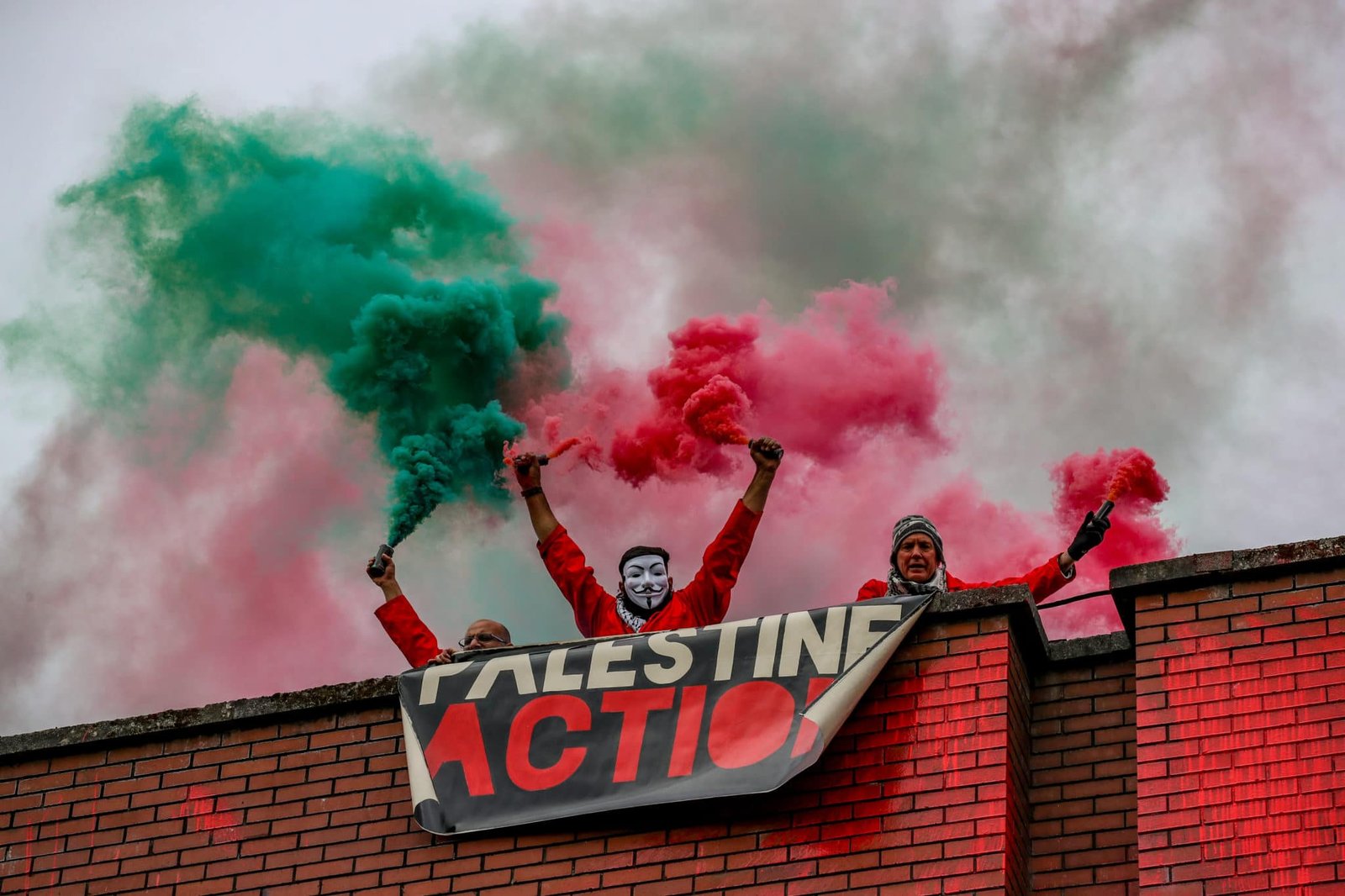
The Palestine Movement in the UK is considered one of the most active youth groups in the European pro-Palestinian scene. The movement emerged in recent years with bold protest activities targeting arms companies involved in supplying Israel with weapons used in attacks on Gaza and the West Bank.
The movement particularly focuses on Elbit Systems UK, the largest Israeli arms manufacturer operating in the UK, producing components for drones, missiles, and surveillance systems.
Members believe that targeting these factories is a moral and humanitarian duty to protect children in Gaza and stop the killing machine, and that direct action has become necessary as the UK government continues to arm the occupation despite open massacres.
Mass Arrests Following the Elbit Factory Action in Bristol
In August 2024, activists carried out a coordinated raid on an Elbit site in Filton – Bristol, disrupting production lines and damaging essential equipment.
This was followed by a large wave of arrests, known in the media as:
“Filton 18” then “Filton 24”
The operation initially arrested 18 activists, later rising to 24 as investigations expanded.
Charges included:
- Aggravated Burglary
- Criminal damage
- Violent disorder
- Additional charges for some, including causing grievous bodily harm to a police officer
Key detainees include:
- Tuta “T” Hocha
- Kamran Ahmed
- Qaisar Zahra
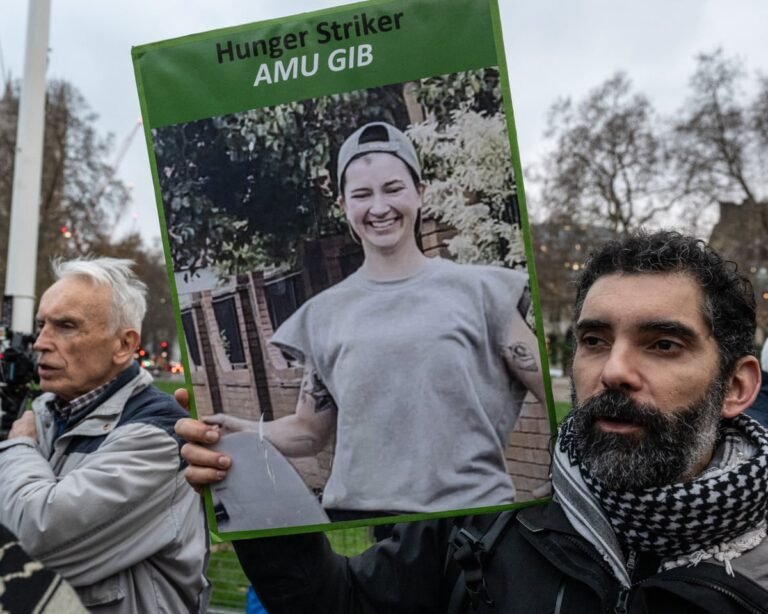
- Amo Ghib
- Heba Maraisi
- John Sink
Most remain in detention for over a year, amid human rights criticism regarding the lengthy procedures and complex trials.
Hunger Strike: Six Detainees Take the Riskiest Decision
On November 2, six detainees launched an open-ended hunger strike to protest:
- Poor detention conditions
- Judicial delays
- Targeting of anti-occupation activists
- The UK government ban on the Palestine Movement
- Trials that classify political acts as “criminal sabotage”
Two Activists Hospitalized after Severe Health Decline
According to Prisoners4Pal, activist Tuta Hocha’s health deteriorated rapidly after more than 20 days of total food abstention.
On November 27, she was hospitalized due to:
- Severe blood pressure drop
- Significant weight loss
- Difficulty moving
- Repeated fainting
Another detainee was hospitalized earlier in the month due to a similar health decline. Activist Kamran Ahmed was also taken to the hospital following a sudden collapse inside prison.
The Movement as a First Line of Defense for the Palestinian Narrative
In the context of increasing European restrictions on pro-Palestinian voices, the experience of these detainees represents a model of political activists paying a high price for exposing the UK’s role in arming the occupation.
Why is the UK Cracking Down Hard on the Movement?
- Exposing the UK military role in Gaza: The movement revealed the involvement of British arms factories in civilian massacres.
- Embarrassing the government internally and internationally: Multiple disruptions of Elbit facilities created public scrutiny.
- Political sensitivity to any Palestinian activism in the UK: Due to historical responsibility for the Nakba.
- Turning solidarity from slogan to direct action: Which security services oppose.
Message from the Detainees: “Palestine is not far… and its voice reaches even the walls”
The movement emphasizes that the hunger strike is not only about detention conditions but also a political statement that solidarity with Palestine cannot be silenced.
“Trying to silence those who disrupt the war machine is an extension of trying to silence those under bombardment… but we will not back down.”
Conclusion
Activists from the Palestine Movement are facing one of the most severe political trials in the UK in recent years.
Six detainees are on a hunger strike, with some hospitalized due to critical health deterioration.
The UK government continues to target the movement after its direct action against arms factories linked to attacks on Gaza.
The case is no longer local… it is part of the global narrative battle against justifying war crimes in Gaza.