




Gaza (PPN) – A senior official in Donald Trump’s administration has confirmed that Washington is pushing forward a plan to divide the Gaza Strip by establishing large residential compounds inside Israeli-occupied zones behind the so-called yellow line, while preventing Palestinians living there from leaving.
According to a New York Times report published Tuesday, these housing units—rebranded by US officials as “Alternative Safe Communities”—would be located in the eastern half of Gaza, in areas where Israel maintains military control over roughly 50% of the territory.
US officials claim the compounds will offer “greater security, jobs, and a chance to rebuild,” with each community designed to house 20,000–25,000 Palestinians and include clinics, schools, and basic services.
Key Figures Behind the Plan
The initiative is led by Aryeh Lightstone, a senior Trump administration official, American rabbi, and former aide to US Ambassador David Friedman. Lightstone also headed the Abraham Accords Peace Institute and is reportedly advising Trump envoy Steve Witkoff.
The report notes that Lightstone’s team is operating out of two luxury hotels in Tel Aviv—the Kempinski and the Hilton—where rooms exceed $700 per night. The group reportedly works alongside unnamed “Israeli magnates.”
Major Concerns and Complications
The NYT highlighted several significant issues surrounding the plan:
- Freedom of Movement: Palestinians would be allowed to enter the compounds but not leave them.
- Israeli Vetting: Many Gazans could be blacklisted from entry, including:
- Public-sector workers
- Police and civil servants
- Health workers
- Anyone related to members of Hamas
- Land Ownership: Gaza has a formal land registry. US and Israeli officials have already begun attempting to obtain land registry documents from Rafah.
- Funding: It remains unclear who would finance the construction and long-term operation of these compounds.
Construction Timeline
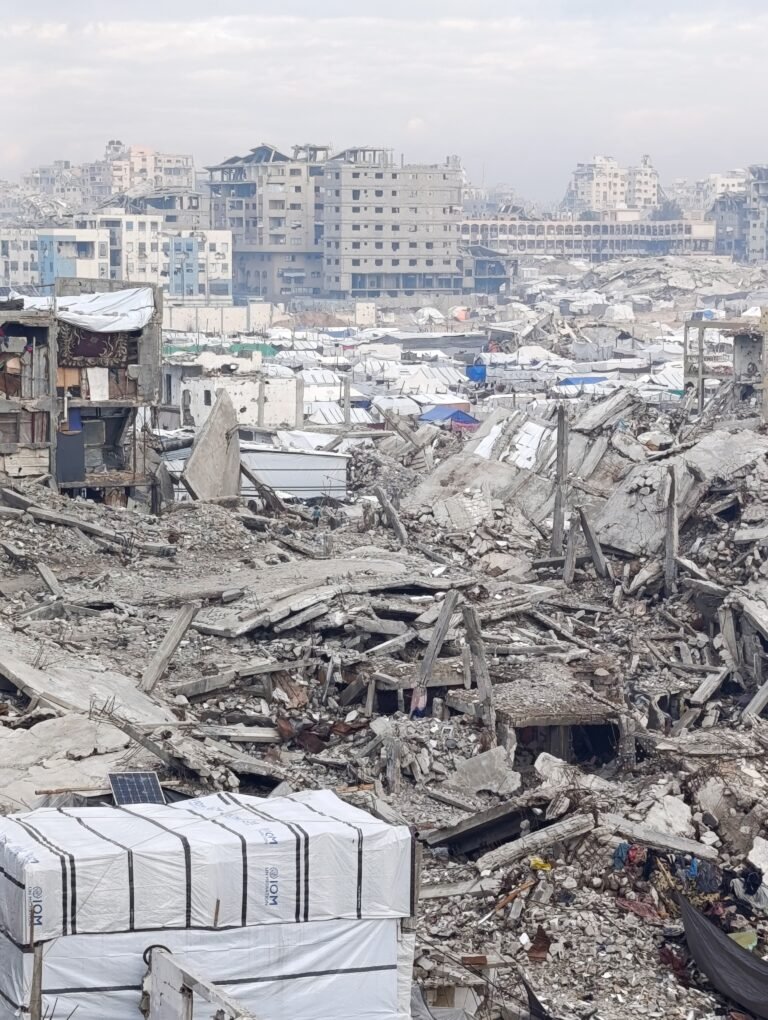
Israeli forces are expected to begin clearing the first compound site in Rafah, near Egypt’s border. The clearance phase could take months if crews encounter:
- Tunnels
- Unexploded ordnance
- Human remains
After clearance, prefabricated housing units would take an additional 6–9 weeks to erect. The first compound alone is estimated to cost tens of millions of dollars.
A US engineering firm, Tetra Tech Solutions, has reportedly already received a State Department contract to clear rubble and unexploded ordnance from the first site.
Part of a Larger Vision for Post-War Gaza
The report indicates that Lightstone’s team is considering additional projects for Gaza, including:
- A Gaza cryptocurrency
- A redesign of Gaza’s urban layout to make it “traffic-free”
Trump adviser Jared Kushner previously suggested reconstructing areas controlled by Israeli forces while leaving other parts of Gaza destroyed.
Warnings of De Facto Partition
Analysts, Palestinian officials, and critics argue that the plan amounts to entrenching a long-term territorial division, creating zones under Israeli military authority and restricting Palestinian autonomy.
According to The Atlantic, which also reported on the project earlier this month, the plan ultimately requires Palestinians to accept life under Israeli military control in centrally located areas.